Please suggest people for me to track down or let me know what you think about domestic or international conservation movements.
A journal of my lessons in the merging of music and social change
Saturday, October 27, 2012
Attention Asian environmental advocates
I'm interested in connecting with other people of color, particularly Asian Americans, who value environmental conservation. What led me to this step is at the conclusion of a shark conservation talk I recently attended, both a small Hong Kong immigrant and older white China basher were visibly convinced a (white) speaker had placed 100% of the blame for shark kills on demand by ethnic Chinese. I felt this was an embarrassment for the shark conservation movement.
Environmental conservation has radically shifted since I was in school: climate change has finally entered popular awareness and the pressure on international cooperation is on. But domestic environmental campaigns are still white-dominated. I'm interested to find if and how other Asians stand among their ethnic communities as conservation leaders. Until conservation values are held in common across national and ethnic borders, there can be little progress on global environmental concerns.
Monday, October 22, 2012
New piece for voice: We Built That Together
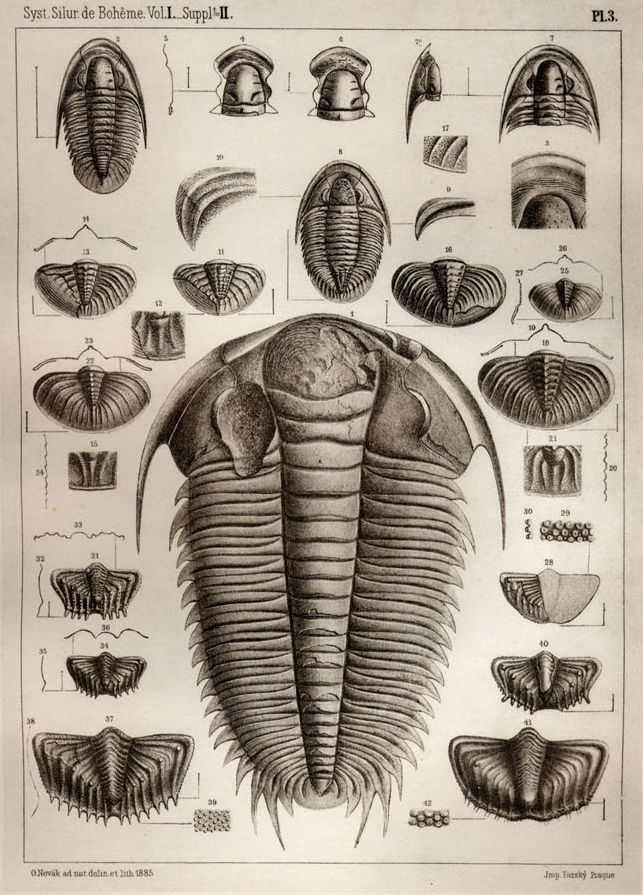
My friend spotted a trilobite fossil on a hike yesterday. She was in Michigan, on billions-years-old tectonic plate that probably hosted the individual she found in a stream or lake. This vastly diverse group of invertebrates were wiped out 250 millions years ago along with almost all life on earth.

We're thoroughly connected to an unimaginable past and inevitable future. Our nation was connected by President Eisenhower via a spectacular program to build interstate highways. High-volume transportation burns fossil fuels, a practice that notoriously connects us to the most unstable regions of the world and destabilize the planet's capacity to sustain life as we know it.
With this in mind, I dashed off a piece for solo voice. Vocalists & linguists, please try it out! Bring your phone or favorite recorder so we can listen together. Comments are welcome here.
Thursday, October 18, 2012
Tues Nov 6 is Election Day
In under three weeks we'll be stopping by our local polling places in the definitive act of democracy. I've avidly followed the presidential and vp debates, always arriving late from work, this Tuesday from being trained to work an Oakland return center (where ballots are collected after polls close). The process is a well-oiled machine, run by the County and citizen workers, that's put to the test only once a year, and expected to process record volumes this year.
No matter what your priorities and values, you participate in the US economy and government. Get out and vote November 6, or now if your state has early voting. You can find out this and other ballot information at lwv.org. By filling in your street address, the site takes you to a summary of contested seats and referendum items in your district.
Then as always, write your representatives. They're also listed on LWV. Yes, the ones who rubber-stamped the waiver of environmental analysis for deep-sea drilling that resulted in the BP catastrophe in the Gulf of Mexico. Even those who aren't up for election this year. Show your friends and me what you tell them, because if nine others write a congressional office about the same issue, staff will investigate. Remember to identify yourself as a voting constituent. If you can blog, you can write your rep.
That's what democracy looks like.
No matter what your priorities and values, you participate in the US economy and government. Get out and vote November 6, or now if your state has early voting. You can find out this and other ballot information at lwv.org. By filling in your street address, the site takes you to a summary of contested seats and referendum items in your district.
![]() |
I'm into the list of upcoming debates and forums, below. That's hot date material right there.
|
Then as always, write your representatives. They're also listed on LWV. Yes, the ones who rubber-stamped the waiver of environmental analysis for deep-sea drilling that resulted in the BP catastrophe in the Gulf of Mexico. Even those who aren't up for election this year. Show your friends and me what you tell them, because if nine others write a congressional office about the same issue, staff will investigate. Remember to identify yourself as a voting constituent. If you can blog, you can write your rep.
That's what democracy looks like.
Monday, September 17, 2012
The most atheist post on this blog
At my day job at the aquarium I rotate through several different stations:
Developed countries are responsible for most of the greenhouse gases already released. This makes developing countries cry foul at every attempt to set international standards for reductions.
But those developed countries are run by white people. These countries got rich during colonialism by bleeding regions that now encompass developing, poor, and conflict-torn nations. Many of these regions are, furthermore, being hit harder and faster by climate change: wetter rainy seasons destroy harvests and natural habitat, extreme weather patterns disrupt subsistence fisheries and planting and harvesting dates. In turn these impacts can touch off and worsen civil conflict (see link above).
What does that mean for our responsibility as living citizens of former colonial nations? The Brits walk softly but they don't want to talk about it. With Portugal, Spain, and Holland (Dutch East India Company), they outright refused to apologize and lobbied others to stand fast. White America is rightly mired in slavery's messy aftermath and Australia also issued an apology for aborigines child abductions, but they are far from alone in stacking up atrocities on people of color. Note also that the apologies were for wrongs against resident populations.
Speaking of residency, the OECD's citizenry is increasingly comprised of immigrants of color. On top of navigating discriminatory systems and culture rifts that threaten familial and social networks, bridging the disparity between developed and set-back nations becomes our responsibility.
One of my favorite stations is by K dock, the local crash pad for wild sea lions. Gazing over the concrete breakwater, I spotted a handsome, tall Brown Pelican.
Pelicans lay three eggs, each one day apart. In an average year, both parents find food only enough for one chick to survive. As hunger sets in, the two eldest chicks beat the youngest with their beaks, heavily hooked from hatching, until it falls out of the nest. The parents ignore it and it dies of exposure or predation. As hunger continues, the eldest turns on the middle chick with a similar result.
Nature is amoral: the benefit of having an extra chick or two on an exceptionally bountiful year outweighs the cost of producing those eggs all the average years, so three are laid and chicks are clubbed to death by their siblings.
Evidence lies infinite around us; another piece might be Nature is amoral: asteroids meaninglessly wiped out most of the life on the planet. Today I'm interested in underlining the immortal peace in this much larger reality. We could continue this mass extinction and climate change trend until the planet becomes uninhabitable by life as we know it. Humans could ourselves become extinct, brief spark in the history of life that we are.
Or we could suck it up and take responsibility in our own lives now, whoever we are, whatever crappy background and ancestry we have to account for. What one change will you make this week to exercise our unique quality of ethics and morality?
"Come right in, I'll take you to the next exhibit..."and so on. But standing beside an 8-foot-tall model of a Megalodon jaw, with a smaller shark jaw in my hand, gazing down the sidewalk at the endless march of international tourists, it hit me.
"Welcome to the ray pool, you can touch the animals here..."
"That's a sevengill shark, the largest type of shark in the Bay..."
"We can't ask the sharks to eat different foods but you can make choices about your food so we all have enough to eat..."
Developed countries are responsible for most of the greenhouse gases already released. This makes developing countries cry foul at every attempt to set international standards for reductions.
But those developed countries are run by white people. These countries got rich during colonialism by bleeding regions that now encompass developing, poor, and conflict-torn nations. Many of these regions are, furthermore, being hit harder and faster by climate change: wetter rainy seasons destroy harvests and natural habitat, extreme weather patterns disrupt subsistence fisheries and planting and harvesting dates. In turn these impacts can touch off and worsen civil conflict (see link above).
What does that mean for our responsibility as living citizens of former colonial nations? The Brits walk softly but they don't want to talk about it. With Portugal, Spain, and Holland (Dutch East India Company), they outright refused to apologize and lobbied others to stand fast. White America is rightly mired in slavery's messy aftermath and Australia also issued an apology for aborigines child abductions, but they are far from alone in stacking up atrocities on people of color. Note also that the apologies were for wrongs against resident populations.
Speaking of residency, the OECD's citizenry is increasingly comprised of immigrants of color. On top of navigating discriminatory systems and culture rifts that threaten familial and social networks, bridging the disparity between developed and set-back nations becomes our responsibility.
![]() |
Pelicans lay three eggs, each one day apart. In an average year, both parents find food only enough for one chick to survive. As hunger sets in, the two eldest chicks beat the youngest with their beaks, heavily hooked from hatching, until it falls out of the nest. The parents ignore it and it dies of exposure or predation. As hunger continues, the eldest turns on the middle chick with a similar result.
Nature is amoral: the benefit of having an extra chick or two on an exceptionally bountiful year outweighs the cost of producing those eggs all the average years, so three are laid and chicks are clubbed to death by their siblings.
Evidence lies infinite around us; another piece might be Nature is amoral: asteroids meaninglessly wiped out most of the life on the planet. Today I'm interested in underlining the immortal peace in this much larger reality. We could continue this mass extinction and climate change trend until the planet becomes uninhabitable by life as we know it. Humans could ourselves become extinct, brief spark in the history of life that we are.
Or we could suck it up and take responsibility in our own lives now, whoever we are, whatever crappy background and ancestry we have to account for. What one change will you make this week to exercise our unique quality of ethics and morality?
Sunday, September 9, 2012
From Philadelphia
This weekend I relaxed in Philadelphia for Gender Reel, staying at my old house. I shared the opening act with the bold genderqueer Ignacio Rivera. That event was free and packed, but the rest of the festival, including screenings were oddly sparsely attended.
Since I had shingles, I ruled out full contact for my own comfort. Instead, I shared my story about reading The Economist's special report on the Arctic while I flew across the continent, then invited everyone to create movement, sound, and visual art while I played fully dressed. It would be a collective exploration of slowing down.
There was a breath or two as I started playing violin spectrally into a corner, exploring a door on the back wall.
Then, more bodies than I could count were on the floor, mostly drawing, some dancing. I approached one making a rubbing of an odd vent on the stage. That person proceeded to tear up the marked page and tape strips on me and hang pieces on my violin.
I went to my full-contact violin headspace, barely aware of what took place in the performance space. During the feedback phase someone showed me a glittery page reading "Traveling ART SHOW" which they'd prepared to crumple up and throw around the room. I didn't react at the time, still emerging from my performative, meditative focus.
From the panel and screenings I took home some big concepts. I noticed, in the lives of many POC, how quickly more urgent issues of solidarity, prosperity, and sustainability left trans* in their wake. The lives of trans* POC aren't troubled solely by this minor difference. While some immigrant families don't accept trans* relatives, it's in a context of broad cultural rejection and communications impasse.
Am I, the performer, necessary in this work? Can't I mark an analog clockface at ten minutes from the start and leave? Would it it enough to set them up with my story and energy and leave them to the creation? Is that less performance than workshop, and isn't an effective workshop one in which the participants are brought to do the extraordinary? What I love about TO, as demonstrated in the modified violin piece, is participants leave feeling more able to use the activity as a tool on their own.
What if, then, we raise the standard of proficiency in our non-performers? This would produce a more powerful citizenry, one better prepared to make urgently needed changes in our lives and world.
Thursday, August 16, 2012
From San Francisco
I'm propped in my usual spot in the kitchen, the high-tech dishwasher purring sweetly. When it gently pauses between modes the distant growl of trucks or planes eases into the gap.
I'm catsitting for a gamelan acquaintance in San Francisco's North Beach neighborhood. Seated on dramatic hills of quiet, upscale residences, it offers me an escape from the presence of others. After a depression scare this morning the sun mercifully appeared, nonchalant about its habitual lateness in these parts. There's nothing that leeches creative energy from my soul like grayness -- a toxic neutrality of weather, soundscape, and effort. Incredulity incarnate.
Tuesday, August 7, 2012
Ouch: Oppression hurts everyone again
The scene: Rainbow Grocery, at the pasta bulk bins on a early Tuesday afternoon.
And if he weren't an older white man, or if I weren't a younger, smaller brown person of "androgynous" demeanor, he wouldn't have said it.
And if I haven't been taking "corrections" from miserable, privileged Americans for as long as I can remember, it wouldn't have left me deeply troubled.
If you were to finish writing this scene, how would it go? Would I look directly at the stranger? Say something to him or his friend? Call the attention of other shoppers? Or would I be shocked into silence, twitching around the stab from a sick, consumption-obsessed institution? Give your ending a title and I'll post my favorite to your credit.
![]() |
| Bulk bins at Rainbow |
Me, casting about: There aren't any tongs in these bins...I'd like to believe this person was complimenting my Earth-consciousness. I was a touch low blood sugar at lunchtime, but the disparagement I heard in his voice rang in my ears. He was dismissing my radical eco conservationism as unrealistic -- in the middle of a liberal, worker-owned, eco-conscious store.
Person next to me talking to a friend about the pastas: Guess not. You can use one of those new plastic bags. Put your hand in it and pick it up, that'll keep things clean.
Me, still casting about: Yeah, but the whole point of this is not to use more plastic.
Person, stopping: That's Earth.
Scene.
And if he weren't an older white man, or if I weren't a younger, smaller brown person of "androgynous" demeanor, he wouldn't have said it.
And if I haven't been taking "corrections" from miserable, privileged Americans for as long as I can remember, it wouldn't have left me deeply troubled.
If you were to finish writing this scene, how would it go? Would I look directly at the stranger? Say something to him or his friend? Call the attention of other shoppers? Or would I be shocked into silence, twitching around the stab from a sick, consumption-obsessed institution? Give your ending a title and I'll post my favorite to your credit.
Subscribe to:
Posts (Atom)